

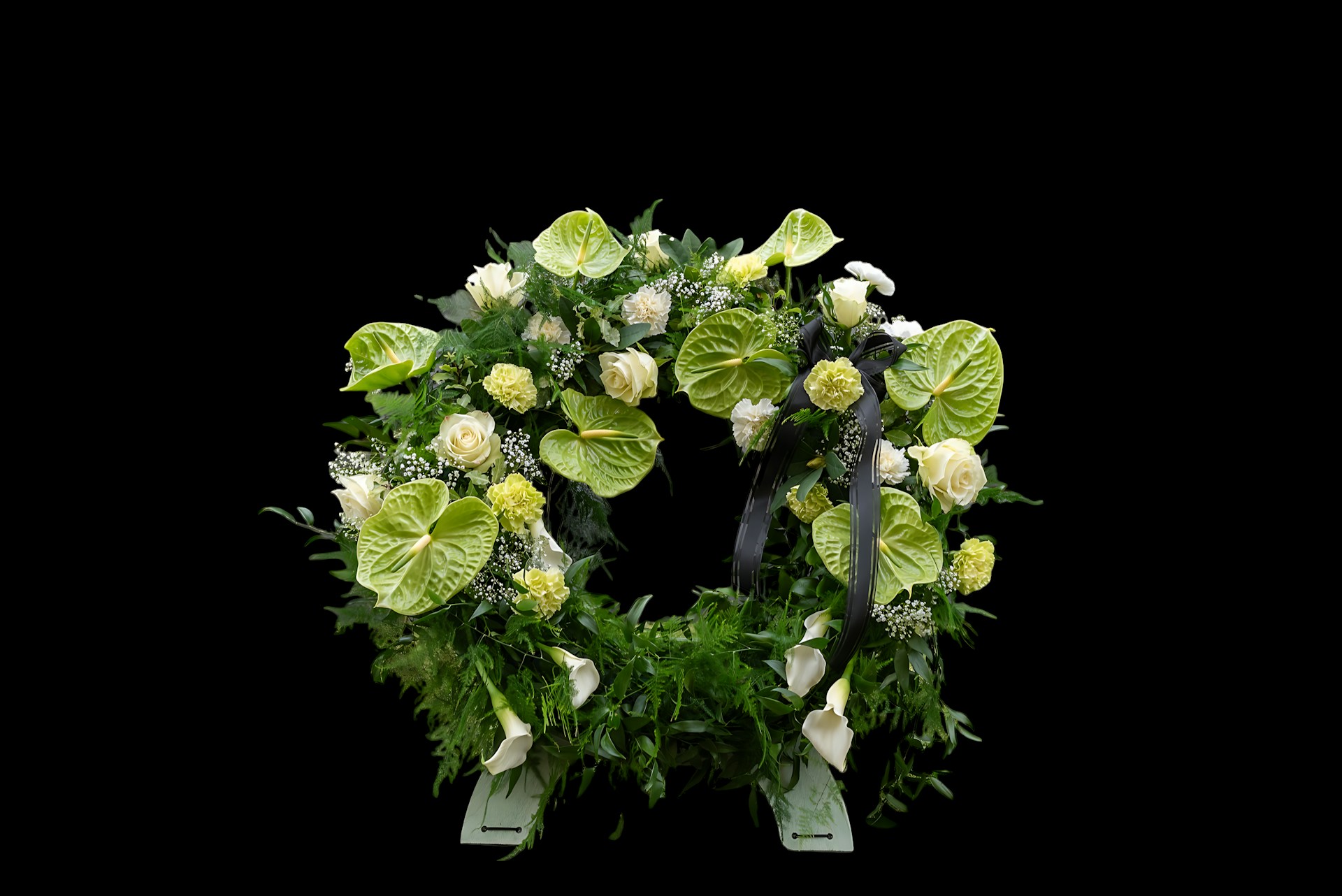
Flower arrangements have long played an important role in ceremonies that mark significant moments in life. They can express celebration, respect, remembrance, sympathy, and support when words may not fully communicate what someone feels. Among the many forms of floral arrangements, wreaths have a particularly recognisable place in memorial and funeral traditions.
The circular shape carries symbolism that has developed across different cultures and periods. Today, flower wreaths are commonly associated with remembrance and paying tribute to someone who has passed away. Their design, colours, flowers, and presentation can all contribute to the message being conveyed.
Understanding the history and meaning behind this tradition can make it easier to choose an appropriate arrangement for a funeral, memorial service, or graveside tribute. While customs vary between families and communities, the underlying purpose is often one of dignity, remembrance, and respect.
Why Wreaths Have a Long History
The use of wreaths dates back thousands of years. Circular arrangements made from plants, leaves, and flowers appeared in several ancient cultures and were used for different purposes, including ceremonies, religious occasions, celebrations, and acts of honour.
The circle itself has often been associated with continuity and eternity because it has no obvious beginning or end. This symbolism helped make circular floral arrangements meaningful in ceremonies connected with life, death, remembrance, and spiritual beliefs.
In some historical traditions, wreaths were placed on the graves of the deceased or used during funeral ceremonies. Over time, different regions developed their own customs concerning the types of plants and flowers used, as well as how arrangements were displayed.
Modern funeral wreaths retain some of this symbolism while also serving a practical purpose. They provide a visible way for family members, friends, colleagues, and organisations to demonstrate their respect and acknowledge a person’s life.
What the Circular Shape Represents
The shape of a wreath is one of its most important symbolic features. Unlike an arrangement designed in a particular direction, a wreath forms a continuous circle.
This can represent ideas such as eternity, remembrance, continuity, and an enduring connection. For people observing religious traditions, the circle may also have spiritual associations. However, the meaning does not have to be religious.
A wreath can simply represent the idea that memories and relationships continue after someone’s death. The circular form provides a quiet visual reminder of something that has no clearly defined endpoint.
This is one reason the design remains widely used for memorial occasions. It is simple enough to suit formal ceremonies while still carrying considerable symbolic meaning.
The Meaning of Flowers Used in Wreaths
The flowers selected for a wreath can influence the overall message. Different flowers have developed traditional associations, although meanings can vary depending on culture, personal preference, and context.
Lilies, for example, are frequently associated with funerals and remembrance. Their appearance is often considered peaceful and dignified, making them a popular choice for memorial arrangements.
Roses can communicate several different emotions depending on their colour. Red roses may be associated with love and deep respect, while lighter shades can create a softer and more understated appearance.
Chrysanthemums are also significant in funeral traditions in a number of cultures. Their meaning varies internationally, so it is useful to consider local customs rather than assuming that a flower has the same symbolism everywhere.
Carnations are another common choice because they are available in a range of colours and can contribute texture and fullness to an arrangement. Their traditional meanings can include remembrance, affection, and admiration.
The most appropriate choice is not necessarily the flower with the strongest traditional symbolism. A person’s favourite flower, a flower connected with their heritage, or a colour associated with their personality can make the tribute more personal.
How Colour Influences a Floral Tribute
Colour can affect the tone of a funeral or memorial arrangement just as much as the type of flower.
White is often associated with peace, purity, dignity, and remembrance. White arrangements are therefore frequently chosen when a calm and formal appearance is desired.
Soft pinks and pastels can create a gentle expression of affection and sympathy. They may be appropriate when the arrangement is intended to feel warm and personal rather than strictly formal.
Red can communicate love, respect, and strong emotional attachment. It may be particularly meaningful when the arrangement comes from a close family member or someone who had a strong personal relationship with the deceased.
Blue can create a calm and peaceful appearance, while purple is sometimes associated with dignity, honour, or spirituality.
There are no universal rules requiring a particular colour. Personal preferences and cultural expectations can be more important than traditional interpretations.
When Wreaths Are Used at Funerals
Wreaths may be displayed at several stages of a funeral or memorial process. They can be sent to a funeral home, placed at a venue where a memorial service is being held, or displayed at a graveside ceremony.
They can also be presented by different groups of people. Immediate family members may select a highly personal arrangement, while friends, colleagues, clubs, schools, or organisations may choose a tribute representing their shared relationship with the deceased.
The size and style can therefore vary considerably. A large formal wreath may be suitable as a collective tribute from an organisation, while a smaller arrangement may be more appropriate from an individual.
The circumstances of the service should always be considered. Some families may have specific preferences regarding flowers, colours, or donations instead of floral arrangements.
Why Personalisation Can Be Meaningful
Although traditional symbolism provides useful guidance, personalisation can make a floral tribute more significant.
Consider the person’s interests, favourite flowers, preferred colours, cultural background, or important relationships. Even a relatively simple arrangement can become meaningful when it reflects something that was genuinely connected to their life.
For example, someone who loved gardening may be remembered with flowers they regularly grew. A favourite colour may also be incorporated without making the arrangement appear overly informal.
Messages attached to the arrangement can provide another opportunity for personal expression. A short and sincere message is generally more appropriate than trying to say too much.
The purpose is not to create an elaborate display for its own sake. It is to create a respectful tribute that reflects the relationship between the sender and the person being remembered.
Cultural and Religious Traditions Matter
Funeral customs differ significantly between cultures and religious communities. A flower that represents mourning in one culture may have a very different meaning somewhere else.
Some traditions place particular importance on specific flowers, colours, or forms of presentation. Others may discourage certain floral arrangements altogether or place greater emphasis on charitable donations, prayers, or other forms of remembrance.
For this reason, it is sensible to consider the family’s customs before ordering an arrangement. If the funeral notice provides instructions, those requests should take priority over general floral traditions.
When there is uncertainty, a funeral director or florist familiar with local customs can provide practical guidance. This can help avoid unintentionally selecting something that conflicts with the family’s wishes.
Choosing an Appropriate Wreath
Choosing a suitable arrangement does not need to be complicated. The most important factors are the relationship with the deceased, the nature of the ceremony, and any preferences communicated by the family.
Think about whether the arrangement is being sent personally or on behalf of a group. This can influence the appropriate size and style.
It is also worth considering the location where the wreath will be displayed. A large arrangement may work well in a spacious venue but may be impractical in a smaller setting.
The season can influence flower availability as well. Florists can often recommend suitable alternatives when a particular flower is unavailable or difficult to source.
A well-designed arrangement should ultimately feel respectful and appropriate rather than overly decorative.
The Role of Wreaths in Remembering Someone
A funeral is often an important part of the grieving process because it provides an opportunity for people to gather and acknowledge a loss. Floral tributes can contribute to this environment by creating a visible expression of respect.
Flower wreaths can represent more than sympathy alone. They can acknowledge a person’s life, the relationships they formed, and the memories they left behind.
For those attending the service, the arrangement may also provide a quiet way to participate in the ceremony. Sending flowers can allow people who cannot attend in person to express their condolences.
After the ceremony, flowers may remain part of the memorial space or be used in another respectful way according to the family’s wishes.
Simple Ways to Make a Floral Tribute Meaningful
There is no requirement for a funeral arrangement to be elaborate. Thoughtful choices can often communicate more than an expensive or oversized display.
When selecting a tribute, consider:
- The deceased person’s favourite flowers or colours
- The family’s cultural or religious traditions
- The size and setting of the funeral or memorial service
- Whether the arrangement is from an individual, family, or organisation
- Any specific instructions provided by the family
- The tone of the message you want the flowers to communicate
The most meaningful tribute is usually one that feels sincere and appropriate to the circumstances.
A Tradition That Continues to Evolve
The tradition of using floral wreaths has changed over time, but many of its central ideas remain familiar. The circular design continues to suggest continuity and remembrance, while flowers provide a natural and dignified way to express feelings that can be difficult to put into words.
Modern families may choose arrangements based on personal preferences rather than following every traditional interpretation. This flexibility allows floral tributes to reflect individual lives and different cultural backgrounds.
Whether simple or elaborate, a wreath can serve as a lasting symbol of respect. Its importance comes not only from the flowers themselves, but from the thought and meaning behind the gesture.
For anyone arranging a funeral tribute, understanding these traditions can make the process a little easier. Ultimately, the most appropriate choice is one that honours the deceased, respects the family’s wishes, and communicates genuine remembrance.